Professional and high-quality metal alloys, ceramic products and concrete additives | RBOSCHCO

Titanium aluminum carbide (Ti3-AlC ₂), as a typical representative of MAX phase ceramic materials, possesses excellent properties of both metal and ceramic. Its powder form (Titanium aluminum carbide powder) has broad application prospects in fields such as electronics, new energy, aerospace, etc., due to its large specific surface area and good dispersibility. The microstructure is the core that determines the macroscopic properties of materials. The crystal structure and microstructure of titanium aluminum carbide powder directly affect its conductivity.
Microstructure analysis of titanium carbide aluminum powder
1. Crystal Structure: Core Characteristics of Layered Stacking
The microstructure of titanium carbide aluminum powder mainly includes two parts: crystal structure and microstructure. As an important member of MAX phase materials, the crystal structure of titanium aluminum carbide has a typical layered stacking characteristic, belonging to the hexagonal crystal system with space group P6 ∝/mmc. From the perspective of crystal structure details, the unit cell parameters of titanium carbide aluminum powder are usually a=0.306 nm and c=1.856 nm. Ti atoms form a regular octahedral structure, C atoms are located in the gaps of the regular octahedra, forming tightly arranged Ti-C layers, while Al atoms fill the gaps between Ti-C layers, forming a continuous layer of Al atoms. The Ti-C layers are connected by strong covalent bonds, endowing the powder with excellent hardness, wear resistance, and high temperature resistance. The Al atomic layers and the Al atoms and Ti atoms are connected by metal bonds, which is also the core structural basis for the excellent conductivity of titanium carbide aluminum powder. This layered composite structure of “ceramic phase+metal phase” enables titanium carbide aluminum powder to possess both the high temperature and corrosion resistance properties of ceramic materials and the electrical and thermal conductivity properties of metal materials, making it a new type of multifunctional inorganic non-metallic powder material.
2. Microscopic morphology: appearance features dominated by the preparation process
In addition to the crystal structure, the micro morphology of titanium aluminum carbide powder is also an important part of its microstructure, which mainly includes the particle size, particle shape, dispersity and surface state of the powder. These characteristics are significantly affected by the preparation process (such as mechanical alloying, hot pressing, sintering, glue gel method, etc.). The commonly used preparation method in industry is mechanical alloying, which mixes and grinds Ti, Al, and C raw material powders through high-energy ball milling. After high-temperature treatment, titanium carbide aluminum powder is obtained. The particle size of the powder prepared by this method is usually between 100 nm and 5 μ m, and the particle shape is mostly irregular polygons with a rough surface and some agglomeration phenomenon. However, the dispersibility can be improved through subsequent modification treatment.
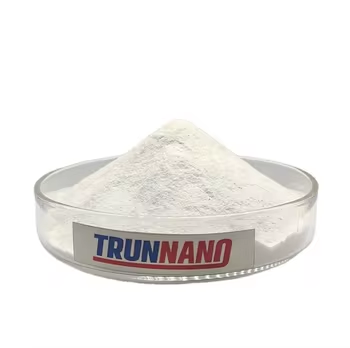
By using scanning electron microscopy (SEM) and transmission electron microscopy (TEM), it can be observed that high-quality titanium carbide aluminum powder particles are evenly distributed, without obvious large-sized aggregates, with a relatively smooth particle surface and clear grain boundaries, and the stacking characteristics of layered crystal structures can be clearly observed; Improper preparation process can lead to uneven particle size, severe agglomeration, and even crystal defects (such as dislocations, stacking faults, etc.), which can damage the integrity of the crystal structure and affect the conductivity and mechanical properties of the powder.
Conductive Characteristics and Mechanism of Titanium Carbide Aluminum Powder
1. Conductive mechanism: electron-dominated conductive pathway
The conductivity of titanium carbide aluminum powder is one of its core application properties, which mainly stems from its unique layered crystal structure. The specific conductivity mechanism can be divided into two types: electron conductivity and hole conductivity, among which electron conductivity is the main conductivity mode. As mentioned earlier, there are continuous layers of Al atoms in the titanium aluminum carbide crystal. The valence electrons of Al atoms are three, forming free electrons in the crystal structure. These free electrons can move freely within the Al atomic layer and can be transferred between the Ti-C layer and the Al atomic layer through the metal bond between Ti atoms and Al atoms, thus forming a good conductive path.
2. Core Conductive Characteristics: Stability and Anisotropy
Compared with pure metal powder, the conductivity of titanium carbide aluminum powder is slightly lower, but its conductivity has good stability and can still maintain good conductivity in harsh environments such as high temperature and corrosion, which is an important characteristic of its superiority over metal powder. In addition, the conductivity of titanium carbide aluminum powder has anisotropy. Due to its layered crystal structure, the conductivity parallel to the layered direction is significantly higher than that perpendicular to the layered direction. This anisotropic feature makes it uniquely valuable in directional conductive materials.
Key factors affecting the conductivity of titanium carbide aluminum powder
1. Crystal Structure Integrity: Negative Effects of Defects
The conductivity of titanium carbide aluminum powder is not fixed and is influenced by various factors, including crystal structure integrity, microstructure, purity, and temperature. Firstly, the integrity of the crystal structure has a significant impact on conductivity. If there are a large number of crystal defects (such as dislocations, stacking faults, vacancies, etc.) in the powder, it will hinder the movement of free electrons and lead to a decrease in conductivity. On the contrary, the more complete the crystal structure, the lower the resistance to free electron movement, and the better the conductivity.

2. Microscopic morphology: the regulatory effect of particle size and dispersibility
Secondly, the particle size and dispersion in the microstructure also affect the conductivity. The smaller the particle size, the larger the specific surface area, the larger the contact area between particles, the denser the conductive pathways, and the higher the conductivity. However, small particle size can easily lead to agglomeration, and there are voids inside the agglomerates, which can damage the conductive pathway and reduce the conductivity. Therefore, it is necessary to control the particle size of the powder within a reasonable range and ensure good dispersibility.
3. Purity and Temperature: The Influence of External Conditions
Purity is another key factor affecting the conductivity of titanium carbide aluminum powder. If the powder contains impurities such as Ti, Al, C, or oxidation products (such as TiO ₂, Al ₂ O3, etc.), it will disrupt the continuity of the crystal structure, hinder free electron transfer, and lead to a decrease in conductivity. Therefore, during the preparation process, it is necessary to strictly control the purity of the raw materials, optimize the heat treatment process, reduce the generation of impurities and oxidation products, and improve the purity of the powder. In addition, temperature also has a certain impact on the conductivity of titanium carbide aluminum powder. In low-temperature environments, the thermal motion of free electrons weakens and the conductivity slightly increases. This temperature dependence requires targeted adjustments for its application in different temperature scenarios.
Application prospects and development direction of titanium carbide aluminum powder
1. Multi-domain application scenarios
Based on its unique microstructure and conductive properties, titanium carbide aluminum powder has broad application prospects in multiple fields. In the field of electronics, it can be used as a conductive filler and added to matrix materials such as resin and rubber to prepare conductive composite materials for electronic components, conductive coatings, and other products. Its good conductivity and high temperature resistance can improve the stability and service life of products; In the field of new energy, it can be used as electrode material for lithium-ion batteries, utilizing its high conductivity and excellent stability to improve the charging and discharging efficiency and cycle life of the battery; In the aerospace field, it can serve as a reinforcing phase for high-temperature structural materials, possessing conductivity, wear resistance, and high temperature resistance, and is used for the preparation of aviation engine components, spacecraft shells, etc; In addition, it can also be used in fields such as wear-resistant coatings and anti-corrosion materials to leverage its comprehensive performance advantages.
2. Existing Problems and Future Development
At present, the research on titanium carbide aluminum powder is still in a continuous deepening stage. Although its preparation process and performance have made certain progress, there are still some problems, such as the high preparation cost of high-purity powder, the need to improve powder dispersibility, and the difficulty in completely avoiding crystal defects. In the future, with the continuous optimization of preparation processes, such as the use of new preparation methods (such as plasma spraying, microwave sintering, etc.), preparation costs can be further reduced, powder purity and dispersibility can be improved, and crystal defects can be reduced; At the same time, in-depth research on the intrinsic relationship between microstructure and conductive properties can achieve precise control of conductive performance and expand its application scenarios by regulating microstructure.
Supplier
RBOSCHCO is a trusted global Titanium aluminum Carbide Powder supplier & manufacturer with over 12 years of experience in providing super high-quality chemicals and Nanomaterials. The company export to many countries, such as USA, Canada, Europe, UAE, South Africa, Tanzania, Kenya, Egypt, Nigeria, Cameroon, Ugand, Turkey, Mexico, Azerbaijan Be lgium, Cyprus, Czech Republic, Brazil, Chile, Argentina, Dubai, Japan, Korea, Vietnam, Thailand, Malaysia, Indonesia, Australia, Germany, France, Italy, Portugal etc. As a leading nanotechnology development manufacturer, RBOSCHCO dominates the market. Our professional work team provides perfect solutions to help improve the efficiency of various industries, create value, and easily cope with various challenges. If you are looking for Titanium aluminum Carbide Powder, please feel free to contact us.
RELATED POSTS
Tin Telluride SnTe Powder: A New Star Material in the Optoelectronic Field
Nano Diamond Oil Additive
Calcium hydride powder shows broad application prospects in the field of new energy
Ws2 Oil Additive
Breakthrough in 3D printing technology: K403 metal powder customized alloy material leads the new trend of aviation manufacturing
