Professional and high-quality metal alloys, ceramic products and concrete additives | RBOSCHCO



PRODUCT PARAMETERS
Description
Overview of NFPP
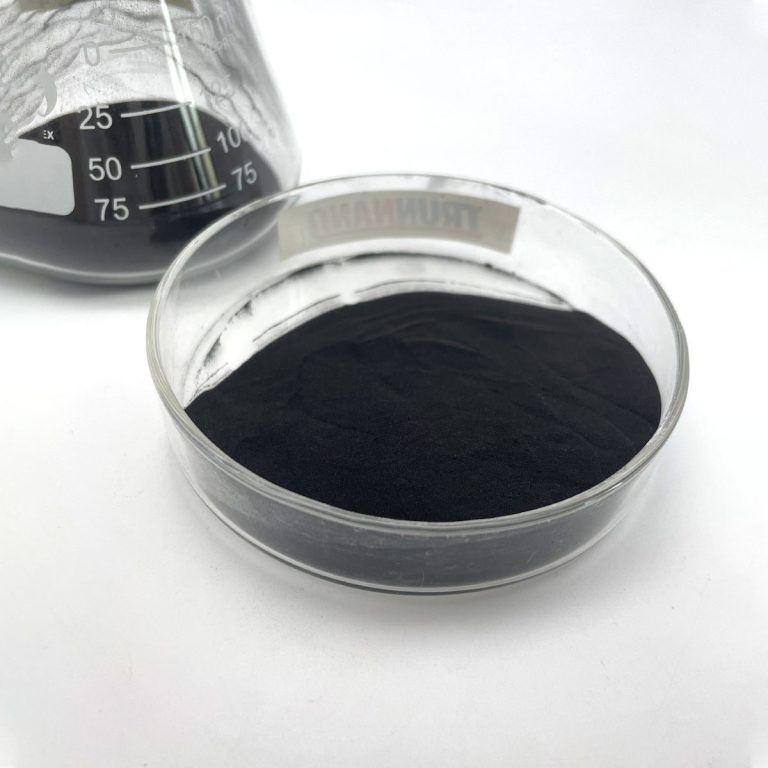
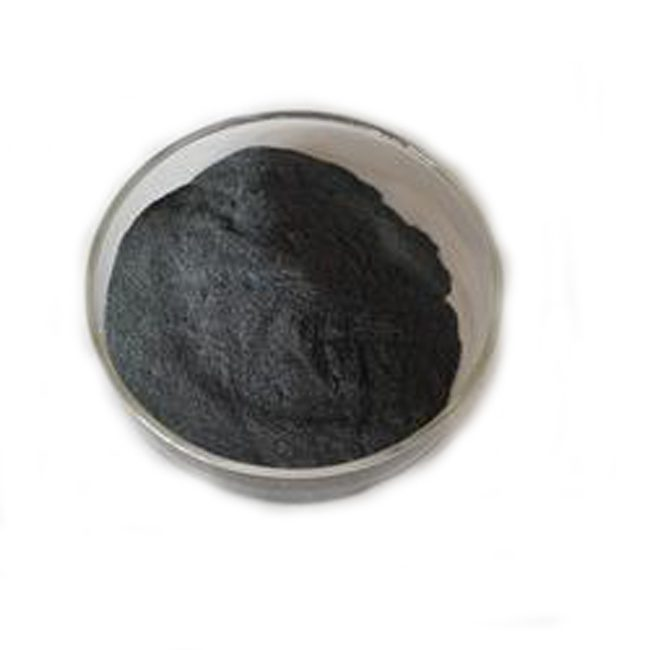
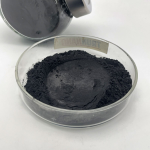
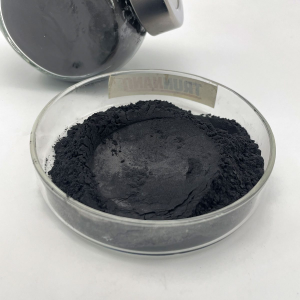
NFPP (Sodium Iron Phosphate Phosphate) is a novel cathode material for sodium-ion batteries. It is synthesized from iron, phosphorus, and boron sources through processes including solid-state synthesis, spray drying, and high-temperature sintering.
The chemical formula is NaₓFeᵧ(PO₄)₂·2P₂O₅, which features a unique 3D framework structure composed of P₂O₅ units and Fe₃P₂O₉ layers. This architecture forms extensive tunnel networks that facilitate rapid sodium-ion transport.
Similar to LFP (Lithium Iron Phosphate), NFPP exhibits outstanding structural stability. During charge/discharge cycles, it undergoes a single-phase solid-solution reaction with a volume change of <4%, ensuring exceptionally long cycle life.
Features of NFPP
- Superior Safety
The polyanionic framework provides excellent thermal stability, outperforming LFP. With no risk of thermal runaway, it is ideal for high-rate and long-life applications. - Extended Cycle Life
The single-phase reaction mechanism (volume change <4%) guarantees remarkable structural integrity over thousands of cycles. - High Rate Capability
The unique tunnel structure supports fast sodium-ion diffusion, enabling high-power charge and discharge. - Excellent Low-Temperature Performance
Reliable operation in cold climates makes it suitable for energy storage in alpine regions and start-stop power systems. - Cost-Effective & Resource-Abundant
Uses inexpensive and widely available elements (iron, phosphorus, boron)—free from lithium, cobalt, and other precious metals. - Eco-Friendly
A cobalt-free and lithium-free system with sustainable, environmentally benign raw materials.
Technical Specifications
| Parameter | Unit | Standard | Test Method |
|---|---|---|---|
| Particle Size (D10) | µm | ≤2.0 | GB/T19077-2016 |
| Particle Size (D50) | µm | ≤6.0 | GB/T19077-2016 |
| Particle Size (D90) | µm | ≤12.0 | GB/T19077-2016 |
| Particle Size (D99) | µm | ≤20.0 | GB/T19077-2016 |
| Loose Density | g/cm³ | 0.58 ± 0.15 | GB/T1479-2011 |
| Tap Density | g/cm³ | 1.10 ± 0.15 | GB/T5162-2021 |
| Compacted Density | g/cm³ | 1.90 ± 0.15 | GB/T24533-2009 |
| Specific Surface Area | m²/g | ≤12.0 | GB/T19587-2017 |
| pH | – | ≤11.3 | GB/T9724-2007 |
| Carbon Content | % | 1.80 ± 0.20 | GB/T20123-2006 |
| Moisture | ppm | ≤1000 | GB/T6283-2008 |
| Magnetic Impurities | ppm | ≤1.5 | GB/T41704-2022 |
| Na⁺ Content | % | 14.50 ± 1.0 | ICP-OES (Agilent 5800) |
| Fe⁺ Content | % | 25.00 ± 2.0 | ICP-OES (Agilent 5800) |
| P₂ Content | % | 19.00 ± 1.5 | ICP-OES (Agilent 5800) |
Electrochemical Performance (mAh/g)
| Parameter | Unit | Standard | Test Method |
|---|---|---|---|
| 0.2C Initial Charge Capacity | mAh/g | ≥108.0 | CR2016 Coin Cell (Half Cell) |
| 0.2C Initial Discharge Capacity | mAh/g | ≥95.0 | CR2016 Coin Cell (Half Cell) |
| 0.2C Initial Coulombic Efficiency | % | ≥87.00% | CR2016 Coin Cell (Half Cell) |
Applications of NFPP
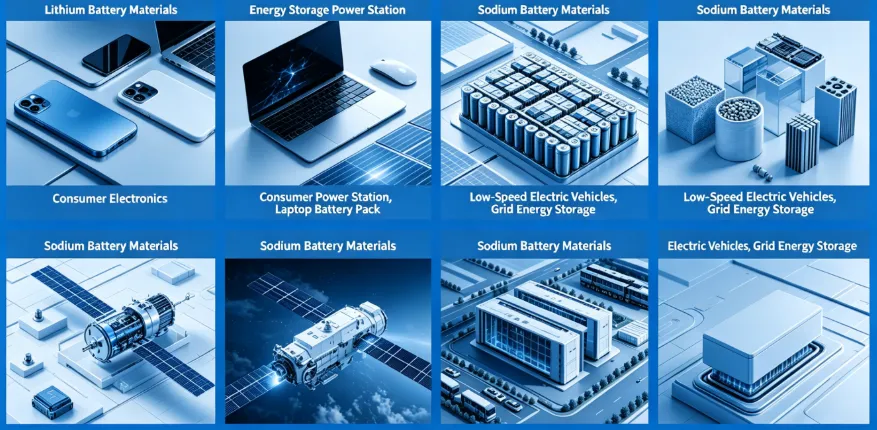
- Large-Scale Energy Storage Systems – Cost-effective, safe, and ultra-long cycle life perfectly matches grid frequency regulation and commercial/industrial storage needs.
- Start-Stop Batteries (SLI) – High-rate capability and excellent low-temperature start-up performance meet the demanding instantaneous power requirements of automotive start-stop systems.
- Electric Two/Three-Wheelers – Combines low cost with long lifespan, offering a superior user experience compared to lead-acid batteries.
- High-Power UPS / Backup Power – High-rate charge/discharge and long floating-charge life make it ideal for UPS systems requiring “long standby, instant high-power output.”
- Construction & Mining Machinery – Cranes, excavators, and other heavy equipment demand 20–40C instantaneous rate output, where NFPP’s rate advantage is especially prominent.
- Low-Speed Electric Vehicles – Low cost and high safety meet the commercialization requirements of low-speed passenger EVs.
- Alpine & Cold-Climate Applications – Exceptional low-temperature performance provides an irreplaceable competitive edge in high-latitude energy storage and telecom backup power systems.
Company Profile
Luoyang Tongrun Nano Technology Co., Ltd. (TRUNNANO) is a global supplier and manufacturer of high-performance battery materials. We specialize in lithium-ion, sodium-ion, and other advanced battery materials, serving 3C electronics, power batteries, and energy storage systems.
Our products include nano cobalt oxide, nano manganese oxide, silicon-carbon anode materials, hard carbon, NFPP, alumina, boron nitride, and more. All are produced under strict quality control, supported by our in-house lab and professional technical team.
If you are looking for reliable battery materials, feel free to contact us or send an inquiry.
Payment Methods
L/C, T/T, Western Union, Paypal, Credit Card, etc.
Shipment
By sea, by air, or by express upon payment receipt.
Package of NFPP
- Packaging Form: 25 kg vacuum-sealed aluminum-plastic film bag.
- Storage Requirement: Use immediately upon opening. Keep sealed and store in a cool, dry place away from direct sunlight.
5 FAQs about NFPP
1. How does NFPP compare to LFP in terms of safety?
NFPP has a more stable polyanionic framework than LFP, offering even better thermal stability and zero risk of thermal runaway, making it safer for high-power applications.
2. What is the typical cycle life of NFPP?
Thanks to its single-phase reaction mechanism and volume change of <4%, NFPP delivers an exceptionally long cycle life—comparable to or exceeding that of LFP in similar conditions.
3. Is NFPP suitable for cold environments?
Yes. NFPP exhibits excellent low-temperature performance, maintaining high capacity and power output even in freezing conditions, making it ideal for alpine energy storage and automotive start-stop systems.
4. Why is NFPP more cost-effective than other cathode materials?
NFPP uses abundant, low-cost raw materials such as iron, phosphorus, and boron. It avoids expensive and scarce elements like lithium, cobalt, and nickel, significantly reducing material costs.
5. What packaging is available and how should it be stored?
NFPP is supplied in 25 kg vacuum-sealed aluminum-plastic film bags. It should be stored in a cool, dry place and used immediately after opening to prevent moisture absorption.
REQUEST A QUOTE
RELATED PRODUCTS

Co-NCM-012 O3-Type Cobalt-Based Ternary Layered Oxide Cathode – Sodium-Ion Battery Positive Electrode
High-Performance Cr-Mn-014 O3-Type Na₀.₈Cr₀.₂Mn₀.₈O₂ Cathode Material for Sodium-Ion Batteries
Ti-Mn-016 Na0.8Ti0.2Mn0.8O2 Cathode Material for Sodium-Ion Batteries
NCM-Na-008 O3-Type Layered Oxide Cathode – Long-Life Sodium-Ion Battery Positive Electrode
V-Mn-018 Na0.8V0.2Mn0.8O2 Cathode Material for Sodium-Ion Batteries