Professional and high-quality metal alloys, ceramic products and concrete additives | RBOSCHCO



PRODUCT PARAMETERS
Description
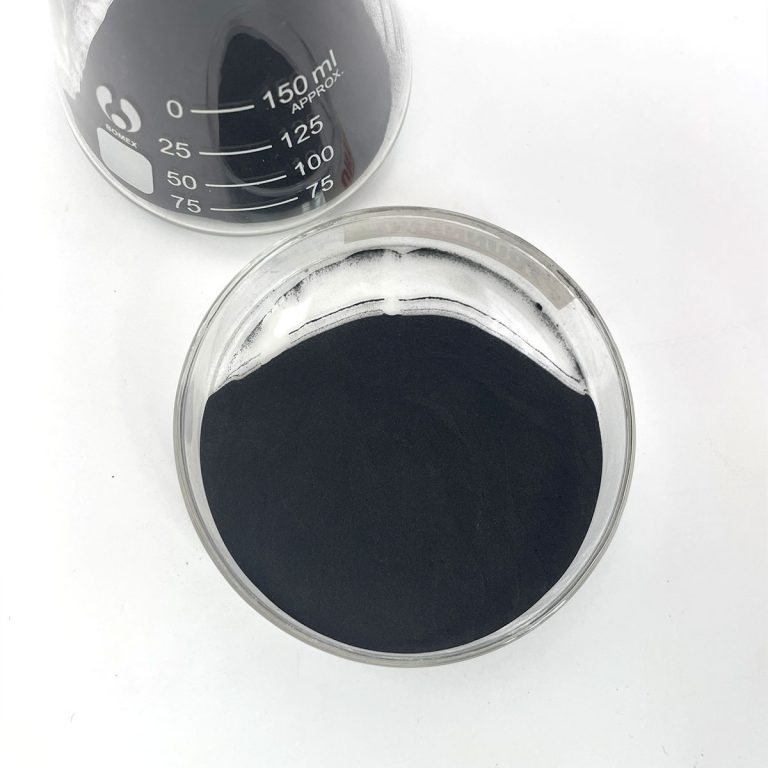
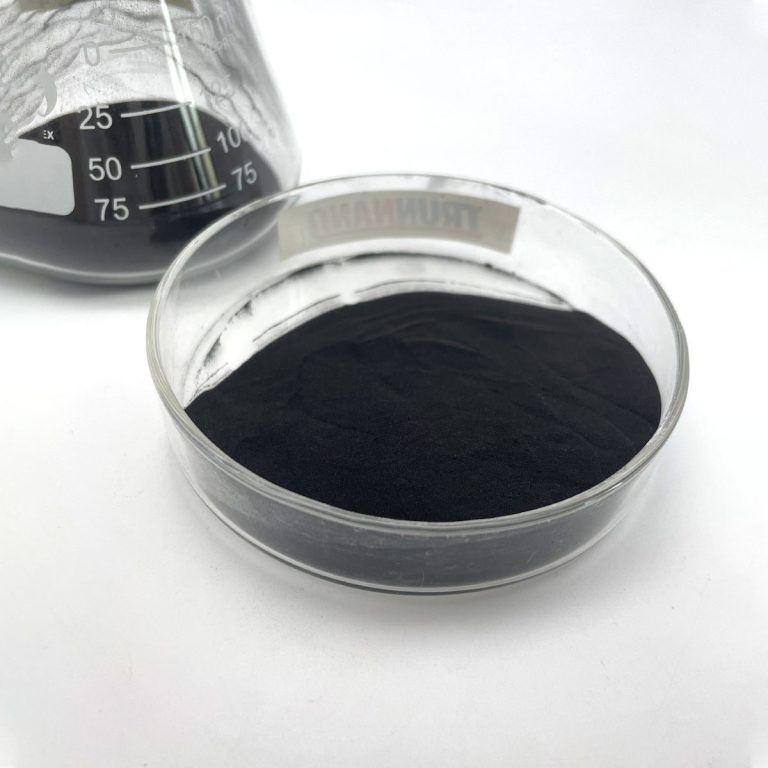
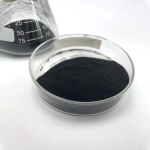
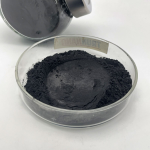
Overview of Pre-Magnesium Silicon-Oxygen-Carbon
Pre-Magnesium Silicon-Oxygen-Carbon (Pre-Mg-SiOC) is a next-generation lithium-ion battery anode material developed through a pre-magnesiation treatment and carbon composite process using silicon oxide as the raw material. During manufacturing, magnesium is introduced to pre-form stable phases such as magnesium silicate within the material. This significantly improves the initial Coulombic efficiency (ICE). Concurrently, the mechanical support provided by the magnesium silicate framework effectively buffers volume expansion during charge/discharge cycles, thereby extending cell cycle life.
This product represents the second-generation silicon-oxygen anode technology. Compared to conventional first-generation SiOx anodes, it achieves a remarkable breakthrough in initial efficiency, offering a high-performance, process-compatible anode solution for high-energy-density battery systems.
Features of Pre-Magnesium Silicon-Oxygen-Carbon
- Significantly Enhanced Initial Efficiency: Through pre-magnesiation, stable magnesium silicate phases are formed in advance, preventing the irreversible consumption of active lithium. The initial Coulombic efficiency is notably higher than that of conventional SiOx anodes, with typical values ranging from 80% to 83% and peak values exceeding 89%.
- Effective Volume Expansion Buffering: The magnesium silicate phase provides robust mechanical support. Combined with the material’s open porous structure, it effectively mitigates volume changes during lithiation, ensuring particle integrity and electrode structural stability.
- Conductive Carbon Coating: The surface carbon coating enhances electronic conductivity, inhibits direct electrolyte erosion on the anode, and promotes the formation of a stable solid-electrolyte interphase (SEI) film, leading to superior cycling stability.
- Excellent Process Compatibility: With a uniform particle size distribution and a wide processing window, this material is compatible with various binder systems, including PVDF, PAA, and CMC/SBR. It also demonstrates good compatibility when blended with graphite anode materials.
Applications of Pre-Magnesium Silicon-Oxygen-Carbon
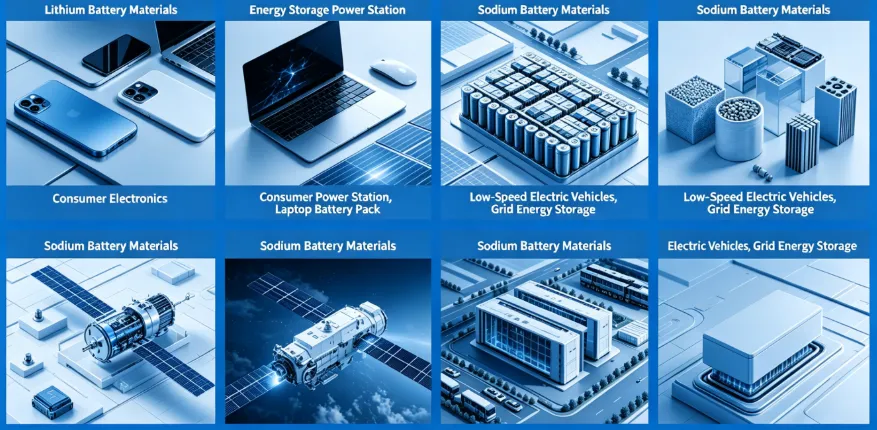
This product is primarily suitable for cylindrical and pouch cell battery systems.
Package of Pre-Magnesium Silicon-Oxygen-Carbon
The product is sealed in moisture-proof bags, which are then placed into cardboard cartons. Packaging weight can be customized according to customer requirements.
Technical Specifications of Pre-Magnesium Silicon-Oxygen-Carbon
| Parameter | Unit | Specification | Test Method |
|---|---|---|---|
| Moisture Content | % | ≤ 0.5 | Electronic Moisture Tester (DHS-16A) |
| Particle Size (D10) | µm | 3.5 ± 0.5 | Malvern Laser Diffraction (Mastersizer 3000) |
| Particle Size (D50) | µm | 6.0 ± 1.0 | Malvern Laser Diffraction (Mastersizer 3000) |
| Particle Size (D90) | µm | 9.5 ± 1.5 | Malvern Laser Diffraction (Mastersizer 3000) |
| Tap Density | g/cm³ | 1.15 ± 0.15 | Tap Density Tester (BT-301) |
| Specific Surface Area (BET) | m²/g | 3.0 ± 0.5 | BET Surface Area Analyzer (ASAP 2460) |
| Carbon Content | % | 3.0 ± 1.0 | Infrared Carbon-Sulfur Analyzer (HCS-140) |
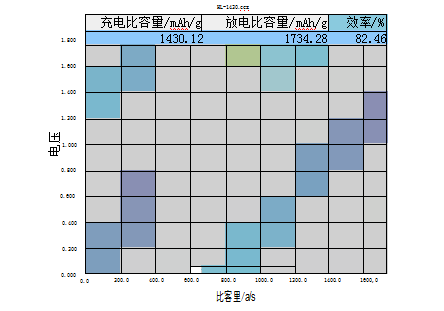
| Reversible Capacity | mAh/g | ≥ 1350 | Battery Tester (CT2001A) |
| Initial Coulombic Efficiency | % | ≥ 82 | Battery Tester (CT2001A) |
Coin Cell Preparation & Testing Conditions of Pre-Magnesium Silicon-Oxygen-Carbon
CR2032 Coin Cell Slurry Formulation:
HL-1420 : Super P : CN-1 Binder = 8 : 1 : 1 (by weight)
CR2032 Coin Cell Slurry Preparation Procedure:
- Weigh 339 g of CN-1 binder and add to 1161 g of ultrapure water. Stir at 600 rpm for 300 minutes using a high-speed mixer until the binder is fully dispersed.
- Weigh 1.728 g of HL-1420 active material and 0.216 g of Super P into the mixing jar. Grind gently for 10 minutes.
- Add 6.371 g of the prepared CN-1 binder solution to the jar and seal.
- Stir on a magnetic stirrer for 360 minutes to obtain a homogenous slurry.
- Coat the slurry onto copper foil. Dry the coated negative electrode at 80°C in a vacuum oven for 12 hours.
CR2032 Coin Cell Testing Protocol (Reference):
- Initial Formation (Discharge/Charge):
- Discharge: 0.1C to 0.005V → 0.05C to 0.005V → 0.02C to 0.005V
- Charge: 0.1C to 1.5V
- Cycle Performance:
- Discharge: 0.5C to 0.005V → 0.1C to 0.005V → 0.05C to 0.005V
- Charge: 0.5C to 1.5V
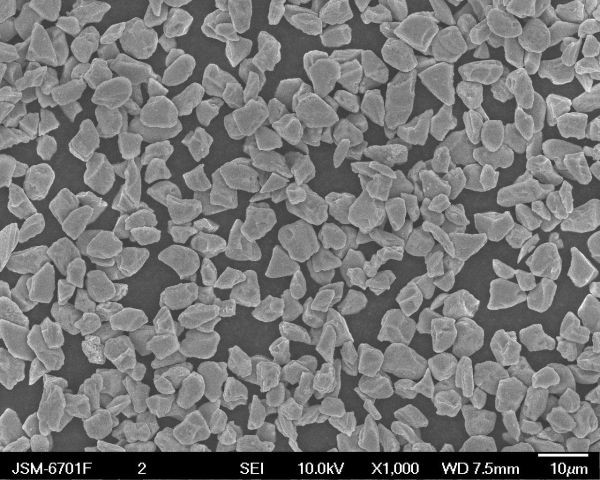
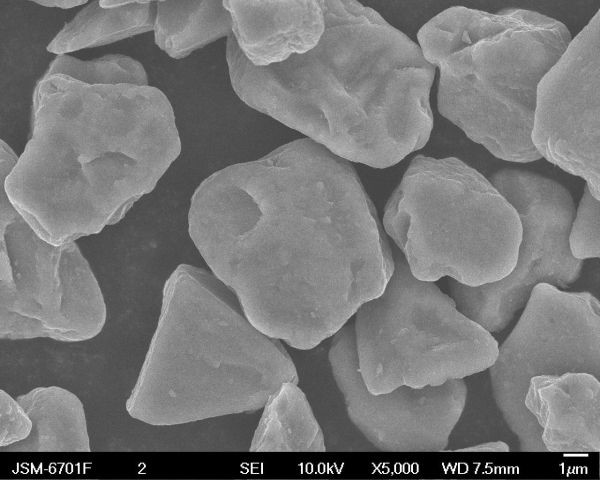
SEM – Particle morphology
Company Profile
Luoyang Tongrun Nano Technology Co., Ltd. (TRUNNANO) is a global supplier and manufacturer of high-performance battery materials. We specialize in lithium-ion, sodium-ion, and other advanced battery materials, serving 3C electronics, power batteries, and energy storage systems.
Our products include nano cobalt oxide, nano manganese oxide, silicon-carbon anode materials, hard carbon, NFPP, alumina, boron nitride, and more. All are produced under strict quality control, supported by our in-house lab and professional technical team.
If you are looking for reliable battery materials, feel free to contact us or send an inquiry.
Payment Methods
L/C, T/T, Western Union, Paypal, Credit Card, etc.
Shipment
By sea, by air, or by express upon payment receipt.
Transport & Storage of Pre-Magnesium Silicon-Oxygen-Carbon
- Transport: Handle with care during transportation to avoid damaging the packaging.
- Spills: Do not use any material that has spilled due to damaged packaging, and do not return it to the original container.
- Storage: Store the product in a dry, well-ventilated area. Ensure the packaging is promptly and securely resealed after each use to maintain product quality.
5 FAQs of Pre-Magnesium Silicon-Oxygen-Carbon
1. What is the typical initial Coulombic efficiency of this material?
The initial Coulombic efficiency typically ranges from 80% to 83%, with a maximum achievable value of over 89%, significantly outperforming conventional silicon oxide anodes.
2. How does this material manage volume expansion?
The pre-formed magnesium silicate phase acts as a rigid mechanical framework, while the internal open porous structure provides void space to accommodate volume changes during cycling, ensuring superior structural integrity.
3. Is this product compatible with existing battery manufacturing processes?
Yes. It features a wide processing window and is compatible with standard binder systems (PVDF, PAA, CMC/SBR) and can be easily blended with graphite for hybrid anodes.
4. What are the recommended storage conditions?
The product should be stored in a dry, well-ventilated environment. Always reseal the packaging promptly after use to prevent moisture absorption.
5. What is the reversible capacity specification?
The guaranteed reversible capacity is ≥1350 mAh/g under standard test conditions.
REQUEST A QUOTE
RELATED PRODUCTS
High Quality Zinc Sulfide CAS 1314-98-3 Zinc Sulfide Powder CAS1314983
Coal-Based Hard Carbon Anode Material for Sodium-Ion Batteries
Cu-IND-009 Copper-Based O3-Type Layered Cathode – Cost-Effective Sodium-Ion Battery Positive Electrode

Silicon-Based Anode Material Series TRGY-1 Battery Anode Material
High-Performance Fumed Silica for Lithium-Zinc-Lead Acid Batteries