Professional and high-quality metal alloys, ceramic products and concrete additives | RBOSCHCO



PRODUCT PARAMETERS
Description
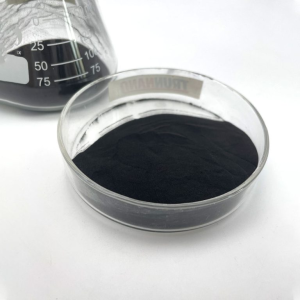
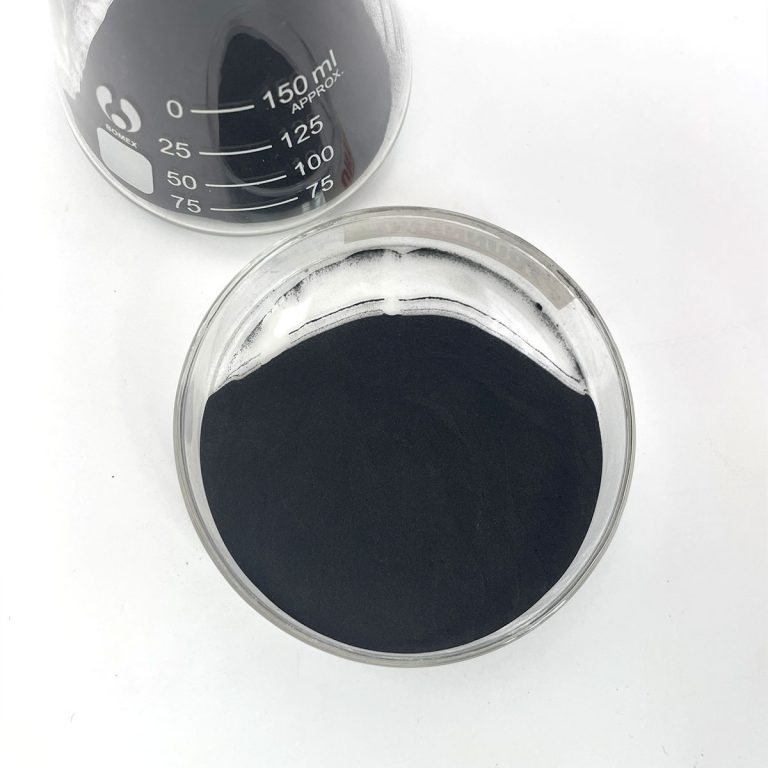
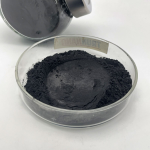
Overview of Coal-Based Hard Carbon
Our coal-based hard carbon is produced using anthracite precursors through a series of advanced processes including pre-carbonization, activation, carbonization, and coating to enhance capacity and kinetic performance. The unique porous structure design and innovative surface modification endow the material with high specific capacity and long cycle life, delivering a reversible capacity of ≥260 mAh/g. With its low cost and high carbon conversion rate, coal-based hard carbon stands out as one of the most competitive precursor routes for hard carbon anode materials.

Features of Coal-Based Hard Carbon
- Significant Cost Advantage & Stable Supply Chain
Abundant coal reserves and low raw material prices make this route economically attractive. Coal-based hard carbon addresses the high cost and supply inconsistency issues associated with biomass feedstocks, positioning it as one of the most economical anode material solutions for sodium-ion battery industrialization. - Excellent Batch-to-Batch Consistency
Unlike biomass-derived hard carbon, which suffers from natural variability in raw materials, coal-based hard carbon uses standardized industrial feedstocks, ensuring high product uniformity and reliability across production batches. - High Carbon Conversion Yield
Coal offers a carbon yield of up to 90%, significantly outperforming biomass-based routes, while also generating valuable by-products that enhance overall process economics. - Superior Coulombic Efficiency
Our coal-based hard carbon demonstrates notably higher charge/discharge efficiency compared to other hard carbon products derived from alternative feedstocks.
Technical Parameters of Coal-Based Hard Carbon
| Parameter | Unit | Specification |
|---|---|---|
| Particle Size – D10 | μm | > 1.1 |
| Particle Size – D50 | μm | 5.5 ± 1.0 |
| Particle Size – D90 | μm | < 12.0 |
| Particle Size – Dmax | μm | < 20.0 |
| Press Density | g/cm³ | > 1.05 |
| Specific Surface Area (SSA) | m²/g | ≤ 8.0 |
| Specific Capacity | mAh/g | ≥ 260.0 |
| Initial Coulombic Efficiency (ICE) | % | ≥ 90.0 |
Applications of Coal-Based Hard Carbon
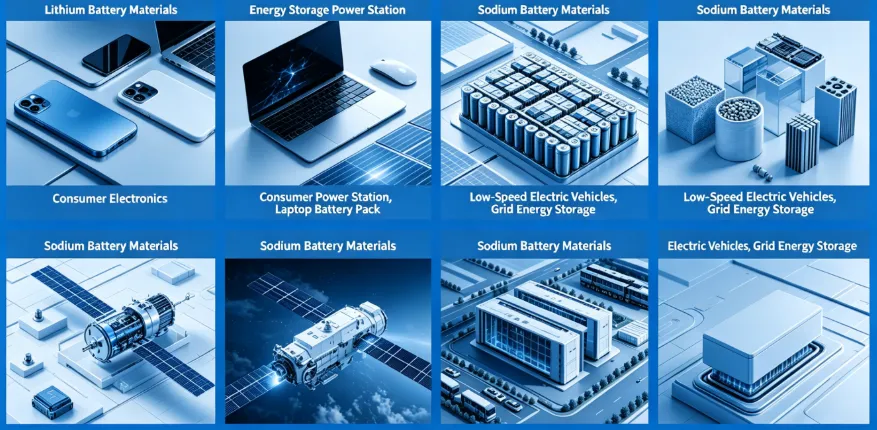
This product is designed as a negative electrode material for sodium-ion batteries, suitable for the following battery systems:
- Large-Scale Energy Storage Stations (grid energy storage, commercial & industrial storage)
The excellent cycling stability and cost-effectiveness perfectly match stationary storage requirements. - Start-Stop Power Supplies
Capable of high-rate performance and wide operating temperature range (-40 to 80 °C). - Electric Two-Wheelers / Low-Speed Electric Vehicles
Combines low cost with extended service life. - Backup Power / UPS Systems
High reliability and long float-charge life meet critical backup demands. - Grid Peak Shaving
Well-suited for large-scale energy storage and grid frequency regulation applications.
Company Profile
Luoyang Tongrun Nano Technology Co., Ltd. (TRUNNANO) is a global supplier and manufacturer of high-performance battery materials. We specialize in lithium-ion, sodium-ion, and other advanced battery materials, serving 3C electronics, power batteries, and energy storage systems.
Our products include nano cobalt oxide, nano manganese oxide, silicon-carbon anode materials, hard carbon, NFPP, alumina, boron nitride, and more. All are produced under strict quality control, supported by our in-house lab and professional technical team.
If you are looking for reliable battery materials, feel free to contact us or send an inquiry.
Payment Methods
L/C, T/T, Western Union, Paypal, Credit Card, etc.
Shipment
By sea, by air, or by express upon payment receipt.
Package of Coal-Based Hard Carbon
- Storage Conditions
Store in a clean, dry, well-ventilated warehouse at ambient temperature (10–35 °C), protected from direct sunlight, rain, and moisture. - Sealed Storage Requirement
The product must be kept under vacuum-sealed conditions. After opening, operations should be conducted in an environment with relative humidity ≤ 30%. - Chemical Incompatibility
Avoid contact with corrosive substances, oxidizing agents, strong acids, and strong alkalis. - Recommended Shelf Life
12 months from the date of manufacture under sealed storage conditions. Periodic quality inspections are recommended during the storage period. - Post-Opening Handling
If not fully used after opening the vacuum packaging, the remaining material must be immediately placed in a dry environment and re-sealed under vacuum. It is recommended to use the opened material within 48 hours.
Transport Information
- This product is a black powder solid and is not classified as a hazardous chemical.
- During transportation, protect from moisture, humidity, rain, and direct sunlight. Prevent packaging damage.
- Handle with care to avoid rough handling. Do not place heavy objects on cartons during transit. Protect against severe vibration, shock, or compression.
- Suitable for transport by truck, train, ship, or aircraft.
- Do not transport together with oxidizing agents, strong acids, or corrosive substances.
- In case of package breakage and spillage, use an explosion-proof vacuum cleaner for cleanup to minimize dust dispersion.
5 FAQs of Coal-Based Hard Carbon
Q1: How does coal-based hard carbon compare to biomass-based hard carbon?
Coal-based hard carbon offers superior batch consistency, higher carbon yield (~90%), and lower raw material costs, while biomass-based variants are more sensitive to feedstock variability.
Q2: Can this product be used in lithium-ion batteries?
This material is specifically designed for sodium-ion battery anodes. For lithium-ion applications, we recommend our biomass hard carbon or blended graphite formulations.
Q3: What is the recommended electrolyte for testing this material?
A standard sodium-ion electrolyte such as 1 mol/L NaPF₆ in EC/DEC or similar solvent systems is commonly used.
Q4: What is the maximum operating temperature range for this anode material?
Our coal-based hard carbon supports a wide operating temperature range from -40 °C to 80 °C, making it suitable for start-stop power and various environmental conditions.
Q5: How should partially used material be stored?
After opening, any unused material must be immediately vacuum-sealed and stored in a dry environment (RH ≤ 30%). It should be used within 48 hours of opening to maintain optimal performance.
REQUEST A QUOTE
RELATED PRODUCTS
Anthracite-Based Porous Carbon for Si/C and Sodium-Ion Batteries

Silicon Carbon TRGT-800 Battery Anode Material
CVD Silicon-Carbon Anode Material High-Capacity Li-ion Battery Negative Electrode
High-Performance Pre-Lithiated SiO Anode Material 1500 mAh/g, 89.5% Efficiency
Silicon Carbon TRGT-200 Battery Anode Material