Professional and high-quality metal alloys, ceramic products and concrete additives | RBOSCHCO



PRODUCT PARAMETERS
Description
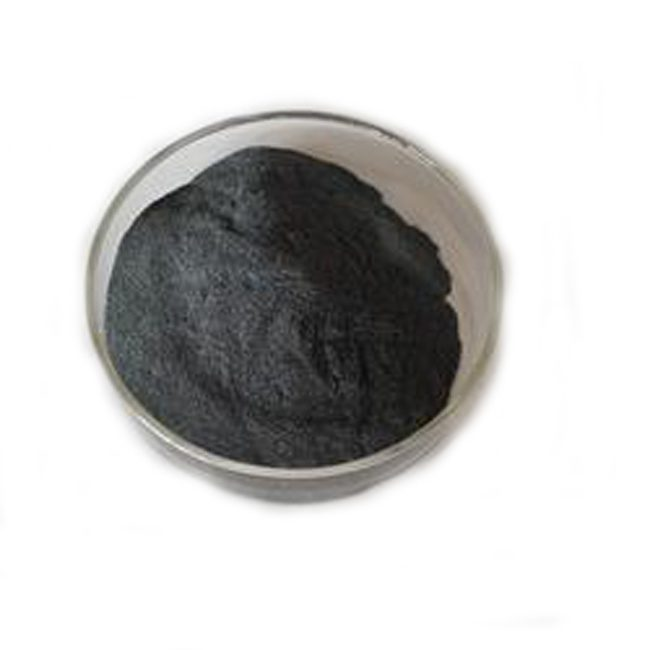
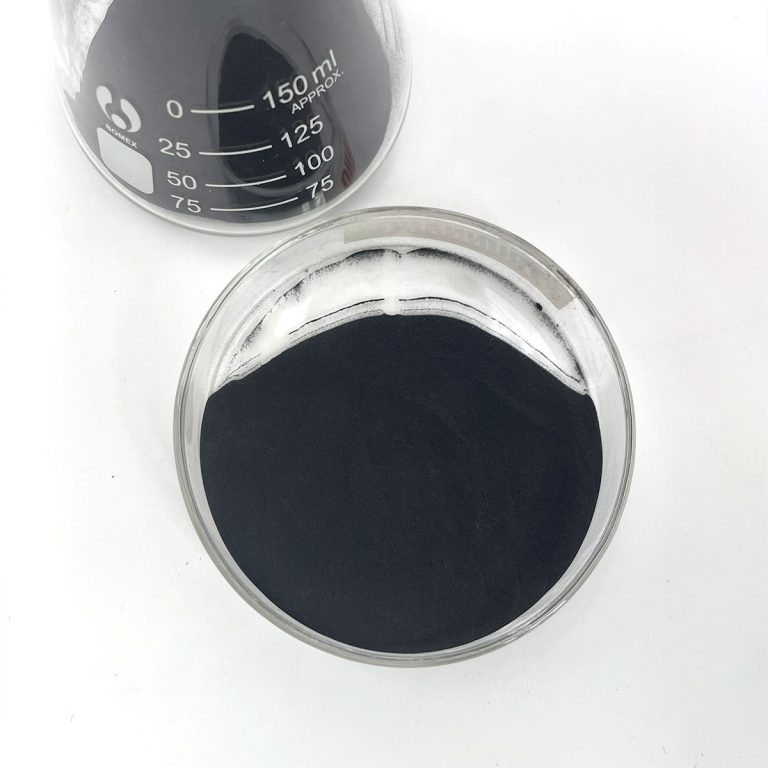
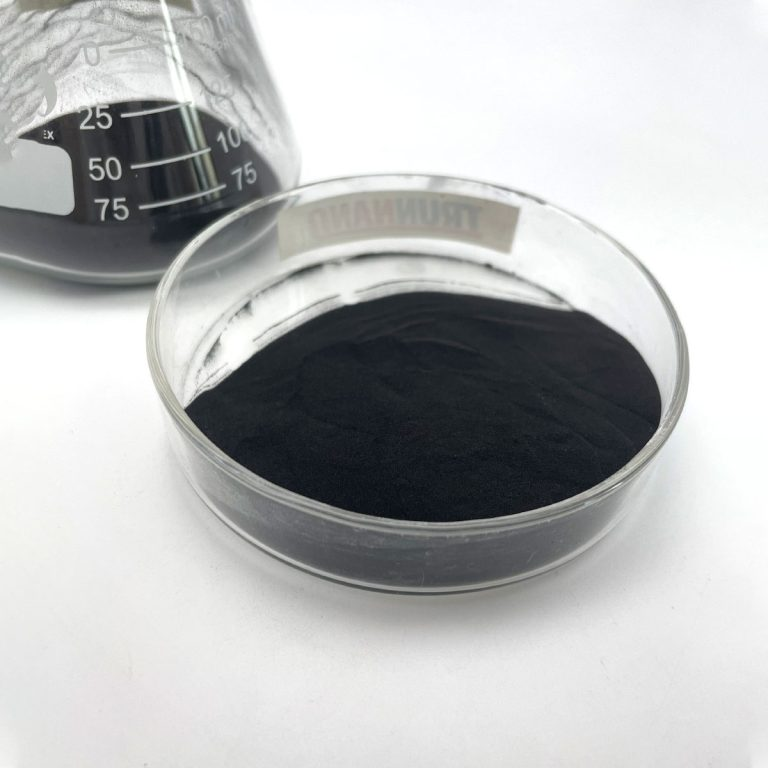
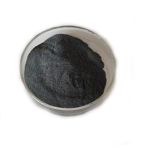
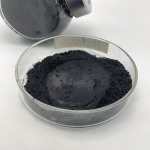
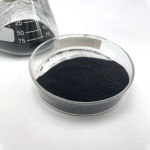
Overview of Biomass-Derived Hard Carbon
Our Biomass-Derived Hard Carbon is a high-performance anode material produced from widely available biomass precursors through a controlled process of high-temperature carbonization, purification, and surface modification. Hard carbon is the preferred anode material for sodium-ion batteries due to its unique disordered crystal structure, abundant nanopores, and surface defects, which enable efficient sodium/lithium storage.

Through precise regulation of carbonization temperature, heating rate, and purification steps, we achieve exact control over the material’s microstructure—including carbon interlayer spacing and closed pore ratio—as well as its surface chemistry. The resulting hard carbon offers excellent electrochemical performance, thanks to its abundant raw material sources, controllable ash content, and well-developed pore structure.
Features of Biomass-Derived Hard Carbon
- Abundant Resources & Cost Advantage
Produced from renewable biomass or agricultural waste, ensuring a low-cost and sustainable supply chain. - Rich Pore Structure & High Sodium Storage Capacity
The unique disordered structure and nanopores deliver exceptionally high reversible sodium storage capacity, with excellent rate performance across a wide current range (0.1C to 2C). - Industry-Leading First-Cycle Coulombic Efficiency
Through optimized carbonization and pore engineering, our hard carbon achieves a first-cycle Coulombic efficiency of 85%–92%, with select grades reaching 92%–93%. - Superior Cycling Stability
Well-tuned interlayer spacing and disorder provide excellent structural stability, enabling long-term charge/discharge cycling without structural collapse.
Technical Specifications
| Parameter | Unit | Standard | Test Method / Instrument |
|---|---|---|---|
| Particle Size (D10) | µm | 2.0 – 4.0 | Laser Particle Size Analyzer |
| Particle Size (D50) | µm | 6.0 – 8.0 | Laser Particle Size Analyzer |
| Particle Size (D90) | µm | 10.0 – 14.0 | Laser Particle Size Analyzer |
| Particle Size (D100) | µm | ≤ 25.0 | Laser Particle Size Analyzer |
| Moisture | % | ≤ 0.5 | Moisture Meter |
| pH Value | – | 7.0 – 11.0 | pH Meter |
| Ash Content | % | ≤ 0.2 | Muffle Furnace Calcination |
| Tap Density | g/cm³ | ≥ 0.65 | Tap Density Tester |
| Pressing Density | g/cm³ | 1.0 ± 0.1 | Pressing Density Tester |
| Specific Surface Area | m²/g | ≤ 5 | BET Surface Area Analyzer (Static Method) |
| 1st Charge Capacity | mAh/g | 300 ± 10 | Neware Battery Tester (0.1C/0.1C, 0–2.5V) |
| Coulombic Efficiency | % | ≥ 90 | Neware Battery Tester (0.1C/0.1C, 0–2.5V) |
Applications of Biomass-Derived Hard Carbon
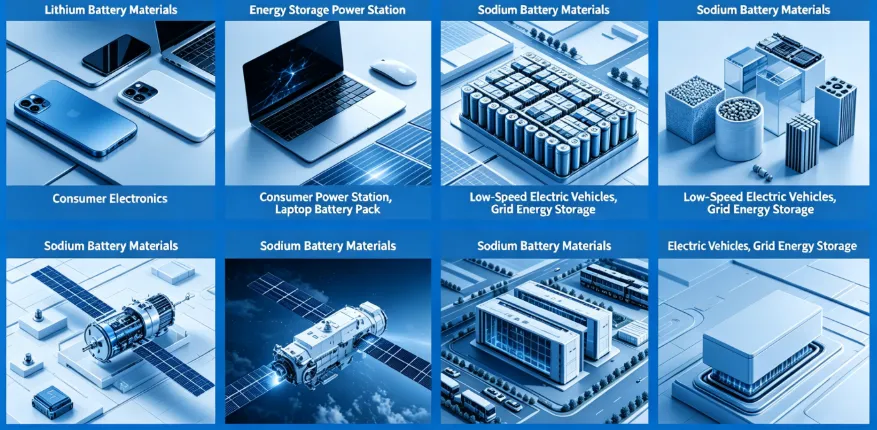
- Sodium-Ion Batteries
- Electric two-wheelers and low-speed electric vehicles
- Large-scale energy storage systems (e.g., grid frequency regulation, commercial & industrial storage)
- Cost-sensitive sodium-ion battery applications
- Lithium-Ion Batteries (as a blended anode component)
Recommended for use in combination with synthetic or natural graphite anodes to improve fast-charging capability and cycle stability.
Package of Biomass-Derived Hard Carbon
We offer two packaging options to suit different handling and storage needs:
Option 1 – Bulk Bag (Ton Bag)
- Net Weight: 300 kg per bag
- Outer Bag Size: 780 × 780 × 600 mm
- Inner Bag Size: 830 mm (W) × 650 mm (H)
- Storage & Handling: Keep dry; palletized storage; maximum stack height: 2 layers
Option 2 – Carton + Aluminum Laminated Film / PE Bag
- Packaging: Product is first sealed in aluminum-laminated film or PE bags, then placed in cartons.
- Net Weight: 20 kg per carton (4 bags × 5 kg)
- PE Bag Size: 600 × 400 mm
- Carton Size: 600 × 500 × 400 mm
- Storage & Handling: Keep dry; palletized storage; maximum stack height: 3 layers
Company Profile
Luoyang Tongrun Nano Technology Co., Ltd. (TRUNNANO) is a global supplier and manufacturer of high-performance battery materials. We specialize in lithium-ion, sodium-ion, and other advanced battery materials, serving 3C electronics, power batteries, and energy storage systems.
Our products include nano cobalt oxide, nano manganese oxide, silicon-carbon anode materials, hard carbon, NFPP, alumina, boron nitride, and more. All are produced under strict quality control, supported by our in-house lab and professional technical team.
If you are looking for reliable battery materials, feel free to contact us or send an inquiry.
Payment Methods
L/C, T/T, Western Union, Paypal, Credit Card, etc.
Shipment
By sea, by air, or by express upon payment receipt.
Transportation & Storage Instructions
- Store in a dry, well-ventilated area free from contaminants.
- Handle with care during transport to avoid damage to inner sealed bags. Do not place heavy or sharp objects on cartons to prevent packaging damage.
5 FAQs About Biomass-Derived Hard Carbon
1. What is the typical first-cycle Coulombic efficiency of this product?
Our hard carbon achieves a first-cycle Coulombic efficiency of 85%–92%, with select grades reaching up to 92%–93% under optimal testing conditions.
2. Can this hard carbon be used in lithium-ion batteries?
Yes. We recommend blending it with synthetic or natural graphite anodes to enhance fast-charging performance and cycling stability in lithium-ion systems.
3. What is the recommended slurry formulation for coin cells?
For oil-based systems: HC:SP:PVDF = 92:4:4. For water-based systems (recommended): HC:SP:CMC:SBR = 94:2:1.5:2.5.
4. How should the material be stored and handled?
Store in a dry, ventilated, and contaminant-free environment. During transport, avoid heavy stacking (max 2–3 layers depending on package type) and protect packaging from sharp objects.
5. What is the specific surface area and ash content?
Specific surface area is ≤ 5 m²/g, and ash content is ≤ 0.2%, ensuring high purity and consistent electrochemical performance.
REQUEST A QUOTE
RELATED PRODUCTS
High-Performance Nano Silicon Powder Li-ion Battery Anode Material

Silicon-Based Anode Material Series TRGY-1 Battery Anode Material
Silicon-Based Anode Material Series TRGY-2 Battery Anode Material
Silicon Carbon TRGT-200 Battery Anode Material
Silicon-Based Anode Material Series TRGY-3 Battery Anode Material