Professional and high-quality metal alloys, ceramic products and concrete additives | RBOSCHCO

PRODUCT PARAMETERS
Description
Overview of Al2O3 and BN Composite Powder
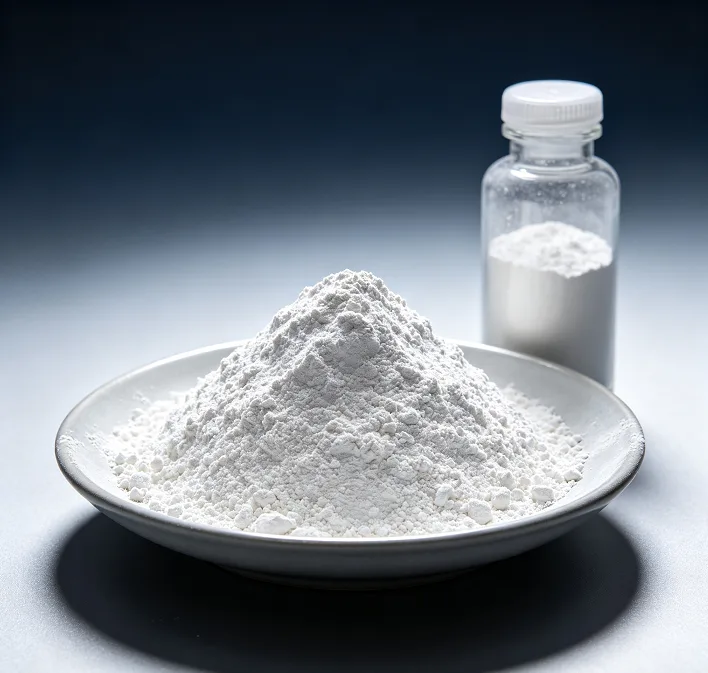
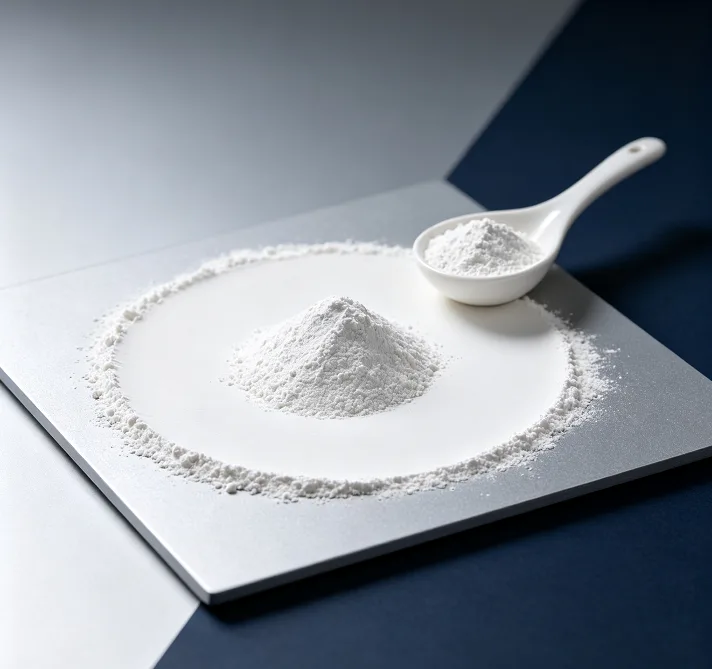
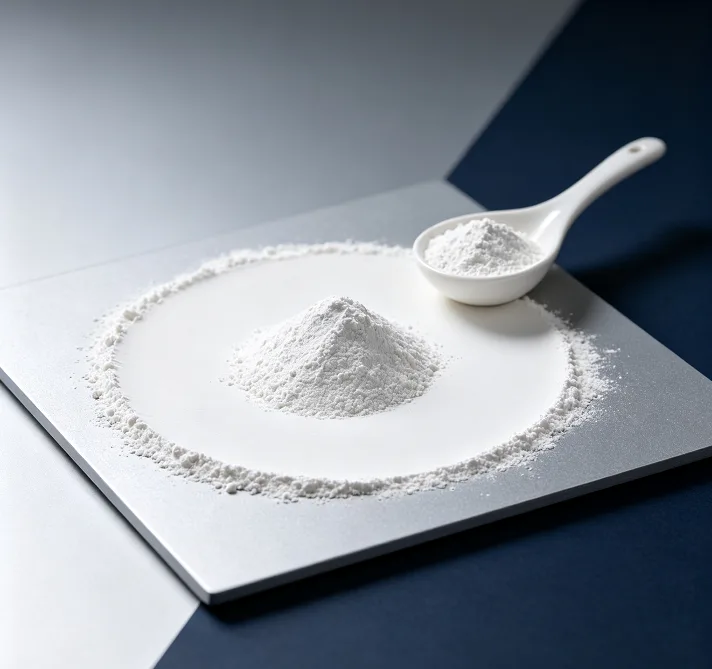
Al₂O₃ + BN Composite Ceramic Powder is a formulation-engineered composite ceramic powder that combines the structural stability, chemical resistance, hardness, and electrical insulation characteristics of aluminum oxide (Al₂O₃) with the thermal transport, low thermal expansion, dielectric, and solid-lubricating characteristics of boron nitride (BN). Unlike conventional single-component Al₂O₃ powder, this material system introduces BN as a functional phase whose content, morphology, particle size, aspect ratio, and dispersion state can be deliberately controlled to modify the behavior of the powder during subsequent ceramic processing. The product is supplied in powder form and is primarily used as a ceramic feedstock, functional additive, or matrix-modifying powder for downstream manufacturing. Its final performance therefore cannot be represented by one fixed set of bulk properties because the resulting characteristics depend on the Al₂O₃/BN ratio, raw-material purity, particle-size distribution, BN morphology, specific surface area, agglomeration state, forming method, green density, sintering temperature, atmosphere, and final porosity.
The main engineering value of the Al₂O₃ + BN system lies in the ability to use powder composition and particle morphology to control thermal pathways and final microstructure. Hexagonal BN has a layered crystal structure and strongly anisotropic thermal transport, with thermal conductivity being substantially higher within the basal plane than perpendicular to it. When platelet or flake-like BN particles are incorporated into an Al₂O₃ powder system, their diameter, thickness, aspect ratio, orientation, and degree of particle-to-particle contact influence the formation of thermal pathways during subsequent forming and sintering. Relatively large BN platelets can contribute to longer thermal transport paths, while finer BN particles can occupy spaces between larger particles and improve local network continuity when adequately dispersed. However, increasing BN content does not automatically result in a proportional increase in the thermal conductivity of the final ceramic. Excessive BN, hard agglomerates, poor packing, or increased residual porosity can introduce additional thermal resistance and interfere with densification. Therefore, Al₂O₃ + BN powder should be designed as an integrated powder system in which composition, morphology, particle-size distribution, dispersion, and downstream processing are considered together.
Key Features
1. Formulation-Dependent Al₂O₃/BN Composition
The composition of Al₂O₃ + BN Composite Powder can be adjusted according to the intended application and downstream ceramic processing method. Al₂O₃ generally provides the primary ceramic framework, contributing high hardness, chemical stability, electrical insulation, and high-temperature stability, while BN functions as a secondary phase for modifying thermal transport, thermal expansion, dielectric behavior, and friction characteristics. The appropriate BN content is therefore determined by the required balance between functional modification and powder processability. A lower BN addition may be selected when maintaining Al₂O₃-dominated packing and structural characteristics is important, whereas a higher BN fraction may be considered when development of interconnected thermal pathways is a major objective. Because BN loading also affects packing efficiency, densification, phase distribution, and pore formation, the optimum composition should be established together with particle morphology, particle-size distribution, and the intended forming and sintering conditions rather than being selected from composition alone.
2. Morphology-Controlled Thermal Network
BN morphology is a critical parameter because particle geometry directly influences particle contact, orientation, packing, and thermal-path continuity. Hexagonal BN commonly exhibits a platelet-like morphology because of its layered crystal structure, and the platelet diameter, thickness, aspect ratio, and orientation can significantly affect thermal transport within the resulting ceramic microstructure. A carefully designed powder formulation may combine relatively larger BN platelets with finer BN particles. Larger platelets can provide extended thermal transport pathways, while finer particles can occupy selected interparticle spaces and increase local network connectivity. However, excessive fine-particle content may increase specific surface area and agglomeration tendency, while excessive large platelets may reduce packing efficiency or create pronounced orientation effects during forming. Morphology should therefore be treated as a controllable engineering parameter that works together with BN loading and particle-size distribution.
3. Controlled Particle Size Distribution
Particle-size distribution directly affects powder flowability, mixing uniformity, packing density, green-body density, binder demand, and the microstructure developed during subsequent sintering. For a multiphase ceramic powder, D50 alone is generally insufficient because powders with the same median particle size can have substantially different fine and coarse fractions and therefore exhibit different packing and processing behavior. Technical characterization can include D10, D50, and D90 to describe the distribution more accurately. Depending on formulation and processing requirements, particle sizes may be engineered from the submicron range to several micrometers, with approximately 0.1–10 μm representing a possible range for certain Al₂O₃ + BN powder systems. A controlled multimodal distribution can allow smaller particles to occupy spaces between larger particles and potentially improve packing efficiency, while excessive fine material can increase surface area, agglomeration, moisture sensitivity, and binder requirements. The appropriate particle-size distribution must therefore be selected according to the intended forming technology.
4. High-Purity Ceramic Raw Materials
The purity of Al₂O₃ and BN is important for advanced ceramic processing because trace impurities can influence grain growth, interfacial reactions, sintering behavior, electrical properties, and the stability of the final ceramic microstructure. Depending on the application, Al₂O₃ and BN purity may typically be controlled within the ≥99.0–99.9% range, with tighter impurity specifications available for more demanding material systems. Individual impurities such as Fe, Si, Ca, Na, and Mg may need to be controlled separately because their effects can extend beyond the total impurity concentration, particularly when they participate in grain-boundary reactions or secondary-phase formation. For high-performance applications, both nominal purity and individual elemental impurity limits should therefore be considered when establishing the powder specification.
5. Controlled Dispersion and Reduced Agglomeration
Uniform BN dispersion throughout the Al₂O₃ powder is essential for maintaining reproducible powder behavior and a homogeneous final microstructure. Al₂O₃ and BN differ in particle shape, surface characteristics, density, and particle-size distribution, so simply blending the two materials does not necessarily result in uniform microscopic distribution. If BN forms hard agglomerates, localized BN-rich and Al₂O₃-rich regions can develop, potentially resulting in uneven packing, localized porosity, non-uniform shrinkage, and variations in thermal transport after processing. Powder preparation may therefore involve controlled mixing, deagglomeration, particle-size optimization, and other dispersion-control methods appropriate to the formulation. The objective is to establish a reproducible distribution of the BN phase throughout the Al₂O₃ powder system rather than simply obtaining a chemically uniform mixture.
6. Adjustable Specific Surface Area
Specific surface area is an important powder parameter because it affects surface interaction, dispersion, moisture adsorption, binder requirements, and sintering behavior. Depending on particle size and morphology, the BET specific surface area of an Al₂O₃ + BN powder system may be engineered within an approximate range of 2–30 m²/g, although the actual specification should be determined according to the formulation and downstream process. Higher surface area can increase interparticle interaction and potentially influence sintering activity, but excessive surface area can also increase agglomeration, moisture sensitivity, and powder-handling difficulty. Consequently, the objective is not to maximize specific surface area but to establish an appropriate relationship between surface area, particle-size distribution, morphology, dispersion, and processing behavior.
Typical Specifications
The following values represent typical engineering parameters for a configurable Al₂O₃ + BN composite or modified ceramic powder system. Actual specifications should be customized according to the formulation, particle morphology, downstream forming method, and target properties of the final ceramic.
| Property | Typical Specification / Control Range |
|---|---|
| Product Type | Al₂O₃ + BN Composite / Modified Ceramic Powder |
| Al₂O₃ Purity | ≥99.0–99.9% |
| BN Purity | ≥99.0–99.9% |
| Al₂O₃ / BN Ratio | Customized |
| BN Content | Formulation-dependent |
| Particle Size | Approximately 0.1–10 μm |
| D10 / D50 / D90 | Customized |
| BN Morphology | Platelet / Fine / Mixed |
| BN Aspect Ratio | Controlled according to application |
| Specific Surface Area | Approximately 2–30 m²/g |
| Moisture | Typically ≤0.5% |
| Agglomeration | Controlled |
| Powder Dispersion | Uniform / Formulation-dependent |
| Thermal Network | Formulation- and morphology-dependent |
| Final Thermal Conductivity | Dependent on composition and downstream processing |
| Final Electrical Resistivity | Dependent on composition, density, and processing |
| Packaging | Moisture-resistant sealed packaging |
Note: Thermal conductivity, electrical resistivity, mechanical strength, thermal expansion, and other bulk properties should generally be measured on the resulting formed and processed ceramic under a defined test method. These properties should not be treated as fixed intrinsic values of the loose Al₂O₃ + BN powder.
Applications
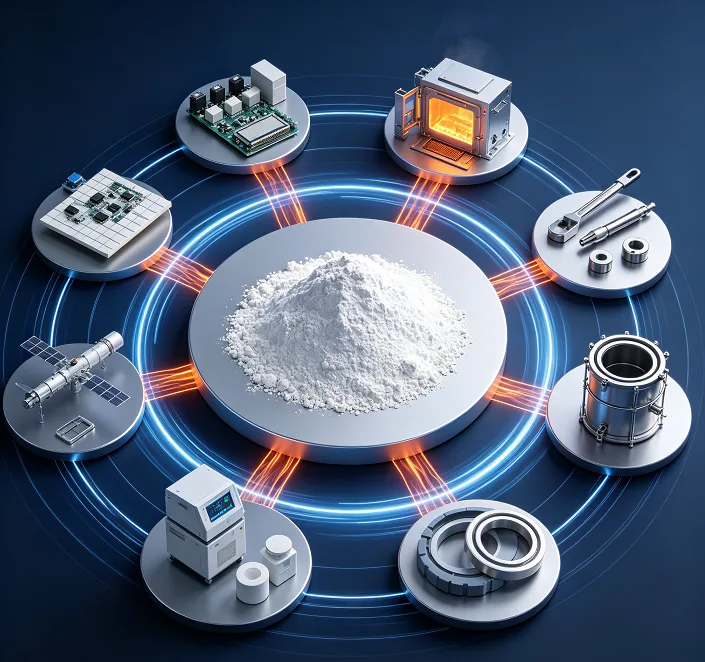
1. Advanced Ceramic Feedstocks
Al₂O₃ + BN Composite Powder can be used as a functional ceramic feedstock for developing multiphase Al₂O₃-based ceramic materials. By adjusting the Al₂O₃/BN ratio, particle-size distribution, BN morphology, aspect ratio, and dispersion state, the powder can be engineered to provide different packing, densification, thermal, and microstructural characteristics during subsequent ceramic processing. Depending on the powder characteristics and binder system, it can be incorporated into processes such as dry pressing, tape casting, extrusion, injection molding, or slurry-based forming, with the powder specification optimized for the requirements of the selected process.
2. Thermal Management Ceramic Formulations
The powder can be incorporated into ceramic formulations where controlled thermal transport is required while maintaining electrical insulation. BN can contribute thermally conductive pathways within an Al₂O₃-based system, while its morphology and loading can be adjusted to influence the continuity and directionality of these pathways. The resulting thermal conductivity is determined by more than the nominal BN concentration; particle connectivity, BN orientation, interfacial thermal resistance, porosity, grain structure, and final density can all have significant effects. This makes particle morphology and powder dispersion important design variables when developing thermally functional Al₂O₃-based ceramics.
3. Electrically Insulating Ceramic Materials
Al₂O₃ + BN powder can be used to formulate electrically insulating ceramic materials requiring a controlled combination of thermal and dielectric characteristics. Both Al₂O₃ and hexagonal BN are electrically insulating phases, while their different crystal structures and physical properties allow the composite formulation to be adjusted according to the required final microstructure. For these applications, high powder purity and controlled metallic impurity levels are important because trace conductive contaminants may affect electrical performance. Final electrical resistivity is also influenced by ceramic density, residual porosity, phase distribution, grain-boundary characteristics, and processing conditions, so powder specifications should be developed together with the downstream manufacturing process.
4. Semiconductor and Electronic Ceramic Feedstocks
The powder can serve as a raw-material system for advanced ceramic formulations used in semiconductor and electronic manufacturing applications where thermal management, electrical insulation, chemical stability, and dimensional stability need to be balanced. In these applications, powder purity, particle-size distribution, BN morphology, moisture content, agglomeration control, and batch-to-batch consistency can become particularly important because variations in powder characteristics can translate into differences in green density, shrinkage, porosity, and final microstructure. For applications with strict contamination requirements, individual metallic impurity limits may be specified in addition to overall powder purity.
5. High-Temperature Functional Ceramic Formulations
Al₂O₃ + BN Composite Powder can also be used to develop high-temperature functional ceramic materials in which thermal transport, thermal expansion, chemical stability, and microstructural characteristics need to be modified through a multiphase formulation. Al₂O₃ provides a stable ceramic phase, while BN can alter thermal and interfacial behavior depending on its content and morphology. The appropriate powder design depends on the intended operating environment and downstream processing conditions, including the forming method, target density, sintering temperature, sintering atmosphere, and required final properties. Powder morphology and composition should therefore be selected together with the processing route rather than independently.
6. Low Friction and Wear-Resistant Ceramic Formulations
The incorporation of BN can introduce solid-lubricating characteristics into an Al₂O₃-based ceramic system, making the powder suitable for developing ceramic materials where friction and wear behavior must be controlled in addition to structural and thermal properties. BN content, platelet morphology, orientation, and dispersion can influence how the lubricating phase is distributed throughout the final ceramic microstructure. However, the actual friction coefficient and wear resistance cannot be determined from powder composition alone because porosity, surface roughness, BN orientation, grain structure, applied load, sliding speed, and test atmosphere can all influence tribological behavior. The powder should therefore be selected according to the complete material and processing system.

Company Profile
RBOSCHCO provides advanced material products and engineered material solutions for specialized industrial and technical applications, including advanced ceramic and functional material systems. For composite and modified ceramic powders such as Al₂O₃ and BN, the material is treated as a formulation-controlled powder system rather than a conventional single-component ceramic raw material. This approach recognizes that downstream performance is determined by the interaction between chemical composition and powder structure. Parameters such as Al₂O₃/BN ratio, purity, D10/D50/D90 particle-size distribution, BN morphology, aspect ratio, specific surface area, dispersion, moisture content, and agglomeration behavior can all influence forming, packing, densification, sintering, and the final ceramic microstructure.
RBOSCHCO can support customized Al₂O₃ + BN powder specifications according to the intended application and downstream processing route. Technical requirements may include Al₂O₃ and BN purity, composition ratio, BN content, particle-size distribution, BN morphology, aspect ratio, specific surface area, moisture level, dispersion characteristics, and packaging requirements. When the powder is intended for subsequent ceramic forming and sintering, additional information such as dry pressing, tape casting, extrusion, slurry processing, target green density, sintering temperature, atmosphere, final density, thermal conductivity, electrical resistivity, or other performance requirements can provide a more complete basis for powder formulation and specification.
Packaging and Storage
Al₂O₃ + BN Composite Ceramic Powder should be packaged to minimize moisture uptake, foreign-particle contamination, and excessive mechanical disturbance during transportation and storage. Fine powders with relatively high specific surface area can be more susceptible to moisture adsorption and agglomeration, so sealed PE or HDPE inner packaging with suitable moisture-barrier outer packaging can be selected according to the powder grade and application. For higher-purity formulations, packaging and handling materials should also be selected to minimize metallic, organic, and particulate contamination. The powder should be stored in a clean, dry environment at room temperature and kept sealed before use. After opening, prolonged exposure to ambient humidity should be minimized because moisture adsorption can affect flowability, interparticle adhesion, agglomeration, and the reproducibility of subsequent mixing and forming operations.
FAQs
Q1: Why combine Al₂O₃ with BN in a ceramic powder?
The primary purpose of combining Al₂O₃ with BN is to create a multiphase powder system in which the two ceramic phases provide complementary functions that are difficult to obtain from Al₂O₃ alone. Al₂O₃ contributes high hardness, chemical stability, electrical insulation, and a stable ceramic framework, while BN can modify thermal transport, thermal expansion, dielectric behavior, and friction characteristics. More importantly, BN introduces additional microstructural design possibilities because its platelet morphology, aspect ratio, loading, and orientation can influence the formation of thermal pathways within the Al₂O₃-based system. By adjusting composition and particle characteristics, the powder can be tailored for different downstream ceramic processes and target microstructures. The objective is therefore not simply to mix two raw materials together, but to establish a controlled powder architecture in which the distribution and geometry of the BN phase contribute to the desired final material behavior.
Q2: How does BN morphology affect the thermal performance of the final ceramic?
BN morphology affects thermal performance because heat transfer through a multiphase ceramic depends strongly on particle connectivity, orientation, interfacial contact, and residual porosity. Platelet-shaped hexagonal BN can provide relatively extended thermal transport pathways along its basal plane, and an appropriate aspect ratio may increase the probability of forming interconnected pathways at a suitable BN loading. However, platelet particles can also become preferentially oriented during forming processes such as uniaxial pressing or tape casting, resulting in different thermal properties in different directions. Fine BN particles can occupy smaller interparticle spaces and increase local contact points, but their larger specific surface area may also increase agglomeration and interfacial resistance if dispersion is poor. Therefore, the effect of BN morphology must be evaluated together with particle size, aspect ratio, loading, orientation, dispersion, and final ceramic density rather than treating morphology as an independent parameter.
Q3: Is a higher BN content always better for thermal conductivity?
A higher BN content does not necessarily produce a proportional improvement in the thermal conductivity of the final ceramic. At low BN concentrations, individual BN particles may remain separated by the Al₂O₃ phase and provide limited long-range thermal connectivity. As the BN concentration increases, particle-to-particle contacts can become more frequent and interconnected thermal pathways may begin to develop, potentially producing a more significant improvement. However, excessive BN can disrupt the packing structure, reduce densification, increase residual porosity, or create unfavorable platelet orientation. Since pores and poorly connected interfaces introduce substantial thermal resistance, these effects can offset the theoretical benefit of adding additional thermally conductive BN. The optimum BN content must therefore be determined from the relationship between BN volume fraction, morphology, dispersion, green density, sintering behavior, and the measured thermal conductivity of the final processed ceramic.
Q4: What particle-size information is important when purchasing Al₂O₃ + BN powder?
For a composite powder system, D50 alone generally does not provide enough information to evaluate processing behavior. D10, D50, and D90 together provide a more complete description of the particle-size distribution and help identify the relative proportions of fine and coarse particles that influence packing density, flowability, agglomeration, and green-body formation. Two powders can have the same D50, for example 2 μm, while having substantially different D90 values and therefore significantly different packing behavior. In an Al₂O₃ + BN system, particle size should also be evaluated together with BN platelet diameter, thickness, aspect ratio, BET specific surface area, bulk density, moisture content, and agglomeration state. These parameters collectively determine how effectively the two phases can be dispersed and packed before sintering, making the complete particle-size distribution much more informative than a single nominal particle-size value.
Q5: What information should be provided when requesting customized Al₂O₃ + BN powder?
A detailed technical inquiry should ideally include the required Al₂O₃ and BN purity, target composition or approximate BN loading, particle-size range, D50 or complete D10/D50/D90 distribution, preferred BN morphology, platelet aspect ratio if relevant, specific surface area, moisture limit, and dispersion requirements. The downstream processing route is equally important because powder requirements for dry pressing can differ significantly from those for tape casting, extrusion, injection molding, or slurry-based processing. If the powder will subsequently be sintered into a dense ceramic, information such as target green density, sintering temperature, atmosphere, expected shrinkage, final density, thermal conductivity, electrical resistivity, or other material requirements can provide additional guidance for formulation development. Supplying these parameters allows the powder to be designed around the actual processing mechanism and final performance requirements rather than treating Al₂O₃ + BN as a generic two-component powder mixture.
REQUEST A QUOTE
RELATED PRODUCTS
Superfine Tungsten Diboride Powder Price CAS No.12007-09-9 WB2 Powder Tungsten Boride

Hollow Glass Sphere Hollow Glass Beads
Chromium Chip Chromium Sheet Chromium Flake CAS 7440-47-3
Electronic Industry AlN Powder Aluminium Nitride Powder AlN Granule CAS 24304-00-5
Pure Tungsten Metal Powder Spherical High Purity Tungsten Powder 99.9% Ultrafine Micron Tungsten Powder