Professional and high-quality metal alloys, ceramic products and concrete additives | RBOSCHCO




PRODUCT PARAMETERS
Description
Overview of Carbon-Coated Tin Composite Anode
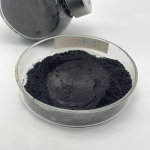
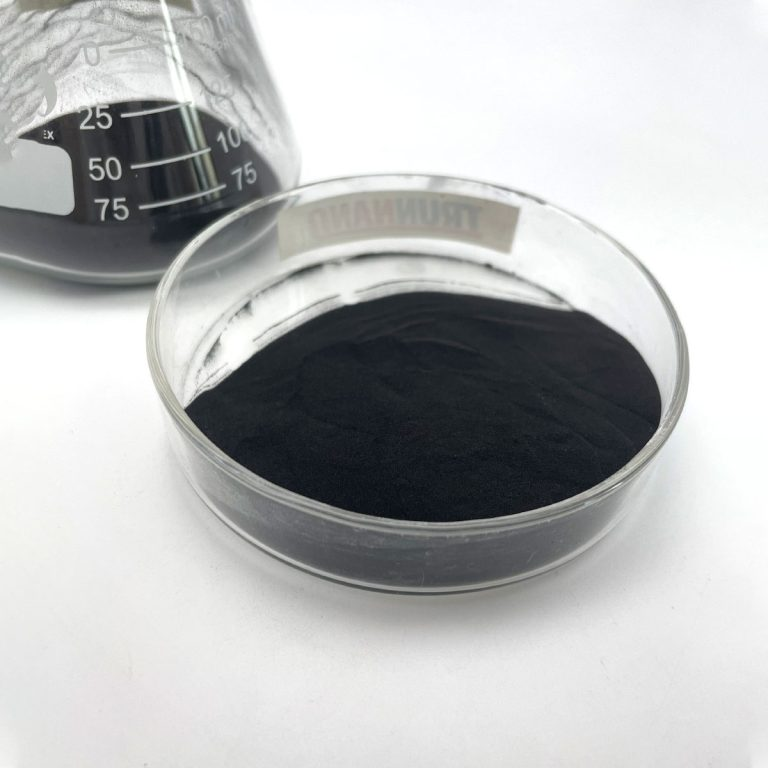
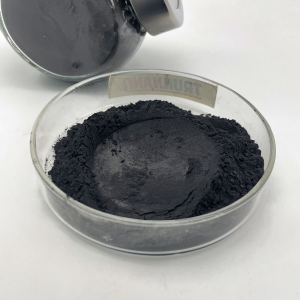
Carbon-coated tin (C@Sn) is a high-capacity composite anode material featuring a typical core-shell structure, where metallic tin serves as the inner core and amorphous hard carbon forms the outer shell. The particles present as near-spherical nano-powders.
The carbon layer enhances electrical conductivity while effectively buffering the volume expansion of tin-based materials during sodium intercalation/deintercalation, achieving an expansion suppression rate of over 50%. This design overcomes the short cycle life and pulverization issues of pure tin anodes, delivering both high specific capacity and long-term cycling stability.
Positioned as a high-capacity anode material for sodium-ion batteries, C@Sn serves as a direct alternative to conventional hard carbon anodes, making it ideal for high-energy-density battery systems.
Features of Carbon-Coated Tin Composite Anode
- Exceptional Capacity Advantage
With a theoretical specific capacity of 994 mAh/g and practical capacity of approximately 700 mAh/g, this material far surpasses traditional hard carbon anodes (~300 mAh/g), significantly boosting battery energy density. - Advanced Core-Shell Structural Design
The carbon shell effectively accommodates the 150%–250% volume expansion of tin-based materials during charge/discharge cycles, suppressing particle pulverization and detachment, thereby substantially extending cycle life. - Superior Electrical Conductivity
The carbon layer forms a continuous conductive network that reduces electrode internal resistance and enhances rate performance—delivering 460 mAh/g at 1C and maintaining 260 mAh/g even at 10C. - Excellent Compatibility
The manufacturing process is fully compatible with existing sodium-ion battery production lines, requiring no major equipment modifications. It can be used as a direct drop-in replacement or in blended formulations with other anode materials. - Outstanding Performance Benchmark
Compared to pure tin anodes, C@Sn demonstrates significantly improved cycling stability and initial Coulombic efficiency (83% vs. 75%). Versus hard carbon, it offers a compelling capacity advantage (700 vs. 300 mAh/g).
Technical Parameters of Carbon-Coated Tin Composite Anode
Physical Properties
| Parameter | Specification Range | Typical Value |
|---|---|---|
| Tin Content (wt%) | 15 – 50 | 25 |
| Carbon Content (wt%) | 50 – 85 | 75 |
| Particle Size D50 (nm) | 50 – 200 | 100 |
| Carbon Shell Thickness (nm) | 18 – 30 | 20 |
| Specific Surface Area (BET, m²/g) | 50 – 200 | 120 |
| Tap Density (g/cm³) | 0.8 – 1.2 | 1.0 |
| Metal Impurities (Fe/Cu/Pb, ppm) | < 10 | < 8 |
| Sodium Ion Residue (ppm) | 300 – 400 | ≤ 350 |
| Crystal Structure | Tetragonal Sn + Amorphous Carbon | No impurity phases |
Electrochemical Performance (Half-Cell, vs Na⁺/Na, 0.01–2.0 V)
| Parameter | Specification Range | Typical Value |
|---|---|---|
| 0.1C Initial Discharge Capacity (mAh/g) | 600 – 750 | 700 |
| 0.1C Initial Charge Capacity (mAh/g) | 500 – 620 | 580 |
| Initial Coulombic Efficiency (%) | 80 – 85 | 83 |
| 0.2C Capacity after 100 Cycles (mAh/g) | 450 – 550 | 520 |
| 0.5C Capacity Retention after 500 Cycles (%) | ≥ 80 | 82 |
| 1C Rate Capacity (mAh/g) | 400 – 500 | 460 |
| 10C Rate Capacity (mAh/g) | 200 – 300 | 260 |
| Sodium Intercalation Volume Expansion (%) | 150 – 250 | 200 |
Electrode Formulation Guidelines
| Parameter | Specification Range |
|---|---|
| Electrode Areal Loading (mg/cm²) | 1.5 – 3.0 |
| Electrode Compaction Density (g/cm³) | 1.0 – 1.4 |
| Recommended Electrode Formulation (Active : Conductive Agent : Binder) | 80–90 : 5–10 : 5–10 |
| Recommended Electrolyte | 1 M NaPF₆ in EC/DMC with 5% FEC additive |
Applications of Carbon-Coated Tin Composite Anode
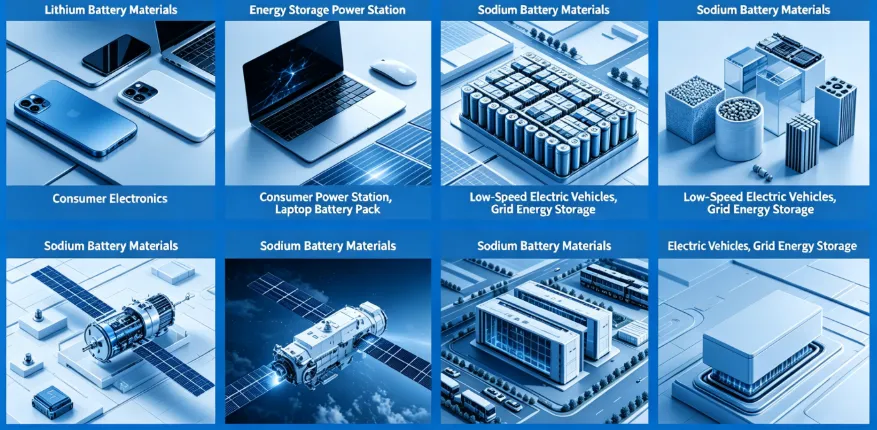
- Energy Storage Batteries
Large-scale grid storage, commercial & industrial energy storage, and residential storage systems—particularly suited for high-energy-density applications. - Low-Speed New Energy Vehicles
Electric two-wheelers, three-wheelers, and other light electric vehicle power batteries, balancing cost with extended range. - Consumer Electronics
Small digital devices, wearable electronics, and backup power supplies requiring high safety and long runtime. - Specialty Power Sources
Industrial backup batteries, outdoor portable power stations, and rail transit auxiliary power supplies with wide temperature tolerance and high-rate capability. - Research & Development
High-energy-density sodium-ion battery R&D, fundamental and applied research on novel composite anode materials (e.g., C@Sn combined with other carbon materials).
Company Profile
Luoyang Tongrun Nano Technology Co., Ltd. (TRUNNANO) is a global supplier and manufacturer of high-performance battery materials. We specialize in lithium-ion, sodium-ion, and other advanced battery materials, serving 3C electronics, power batteries, and energy storage systems.
Our products include nano cobalt oxide, nano manganese oxide, silicon-carbon anode materials, hard carbon, NFPP, alumina, boron nitride, and more. All are produced under strict quality control, supported by our in-house lab and professional technical team.
If you are looking for reliable battery materials, feel free to contact us or send an inquiry.
Payment Methods
L/C, T/T, Western Union, Paypal, Credit Card, etc.
Shipment
By sea, by air, or by express upon payment receipt.
Package of Carbon-Coated Tin Composite Anode
Standard Packaging
- Sealed vacuum packaging with moisture-barrier protection.
- Packaging options include aluminum-laminated film bags or PE bags, placed inside sturdy cartons.
Packaging Dimensions & Weight
- Net weight per carton: 20 kg (4 × 5 kg inner bags)
- Inner bag: 5 kg/bag in aluminum-laminated film or PE bag
- Carton dimensions: 600 × 500 × 400 mm
- PE bag dimensions: 600 × 400 mm
Storage & Handling Requirements
- Store in a dry, cool, well-ventilated environment away from moisture and contaminants.
- Palletized storage recommended; maximum stack height: 3 layers.
- Handle with care during transport; do not place heavy or sharp objects on cartons.
- Shelf life: 12 months from date of manufacture under sealed, recommended storage conditions.
- After opening, unused material must be immediately vacuum-sealed and used within 48 hours to maintain optimal performance.
5 FAQs of Carbon-Coated Tin Composite Anode
Q1: How does C@Sn compare to conventional hard carbon anodes?
C@Sn offers more than double the practical capacity (~700 mAh/g vs. ~300 mAh/g for hard carbon), delivering significantly higher energy density while maintaining good cycling stability through its protective carbon shell design.
Q2: What is the volume expansion rate of this material?
The sodium intercalation volume expansion is 150%–250%, but the carbon shell effectively buffers this expansion, suppressing pulverization and maintaining electrode integrity over extended cycling.
Q3: Is this material compatible with existing production lines?
Yes, the C@Sn composite is fully compatible with standard sodium-ion battery manufacturing processes and can be used as a direct replacement or in blended formulations with hard carbon or other anode materials.
Q4: What electrolyte is recommended for optimal performance?
We recommend 1 M NaPF₆ in EC/DMC with 5% FEC additive for best results. This electrolyte system supports stable solid-electrolyte interphase formation and long cycle life.
Q5: How should partially used material be handled?
After opening the vacuum packaging, any remaining material must be immediately resealed under vacuum and stored in a dry environment. It should be used within 48 hours to prevent moisture absorption and performance degradation.
REQUEST A QUOTE
RELATED PRODUCTS

Cobalt Ferrite CoFe₂O₄ Nanoparticles Applied for Battery Anode Material
Anthracite-Based Porous Carbon for Si/C and Sodium-Ion Batteries
Biomass-Derived Hard Carbon Anode Material for Sodium-Ion Batteries High Capacity Long Cycle Life
Coal-Based Hard Carbon Anode Material for Sodium-Ion Batteries
High Quality NaxTMO2 Anode Material for Sodium Ion Batteries
